Ultimate Fall Garden Cleanup Checklist for Small-Space Homesteaders

The air turns crisp, leaves drift down, and even the busiest little garden starts to settle in for a rest. While summer gardening slows, there’s still important work to do—tasks that tidy your space and set the stage for a strong, productive season next year.
Whether you’re tending a small backyard plot, a few raised beds, or a container garden on your porch, this fall garden cleanup checklist will guide you on what to prune, pull, plant, and compost before frost arrives.

Reader Summary
- A simple, step-by-step fall cleanup checklist designed for small gardens and container spaces so you can knock out the most important tasks in just a weekend.
- Clear guidance on what to pull, what to compost, and how to store seeds, tools, and transplants so you can avoid pests and disease over winter.
- Common cleanup mistakes to steer clear of, like over-pruning, mulching too heavily, or composting wet plant debris, plus easy fixes you can make right away.
- A straightforward timeline for what to do next, including soil amendments, cover crops, and planting windows so your space is ready for a healthy spring.
*This post contains affiliate links. If you purchase through these links, I may earn a small commission at no extra cost to you. Thank you for supporting my cozy little corner of the internet.
If you are cleaning up your garden beds in preparation for next year’s garden, you will have a lot you might want to compost! This will help feel your soil and next year’s harvest or beautiful flowers. I created a compost guide blog post to help make the process easier. I hope it is of great help for you! If you start planning your Spring garden this winter, you might enjoy my post on 10 Best Flowers for Pollinators in Vegetable Gardens (Zones 6b–7a).
Before You Start Your Fall Garden Cleanup
Before we dive into the checklist, it helps to remember that fall garden cleanup does not have to be overwhelming. In a small space homestead, the goal is simply to tidy up what is finished, protect what is still healthy, and set your garden up for an easier start in the spring. You do not need to do everything at once, and you do not need a perfectly “clean” garden to be successful. Think of this more as seasonal maintenance rather than a complete reset.
1. Pull Spent Plants & Weeds
Start by removing any dead or dying plants—anything that has stopped producing or shows signs of disease or pests. Even in a small space, leaving unhealthy plants can invite problems to overwinter.
Tips for small-space homesteads
- Compost healthy plant material if you can.
- Avoid adding diseased plants (like powdery mildew or bug-infested stems) to your compost.
- Pull weeds now so they don’t scatter seeds for next year.

2. Prune Thoughtfully
Not all plants need a fall trim. Knowing which to prune now versus later can save you time and preserve your harvest.
Prune now:
- Raspberries (remove spent floricanes)
- Herbs like mint, oregano, and lemon balm—cut back and dry for winter use
- Perennials that look messy if you prefer tidy beds
Wait until spring:
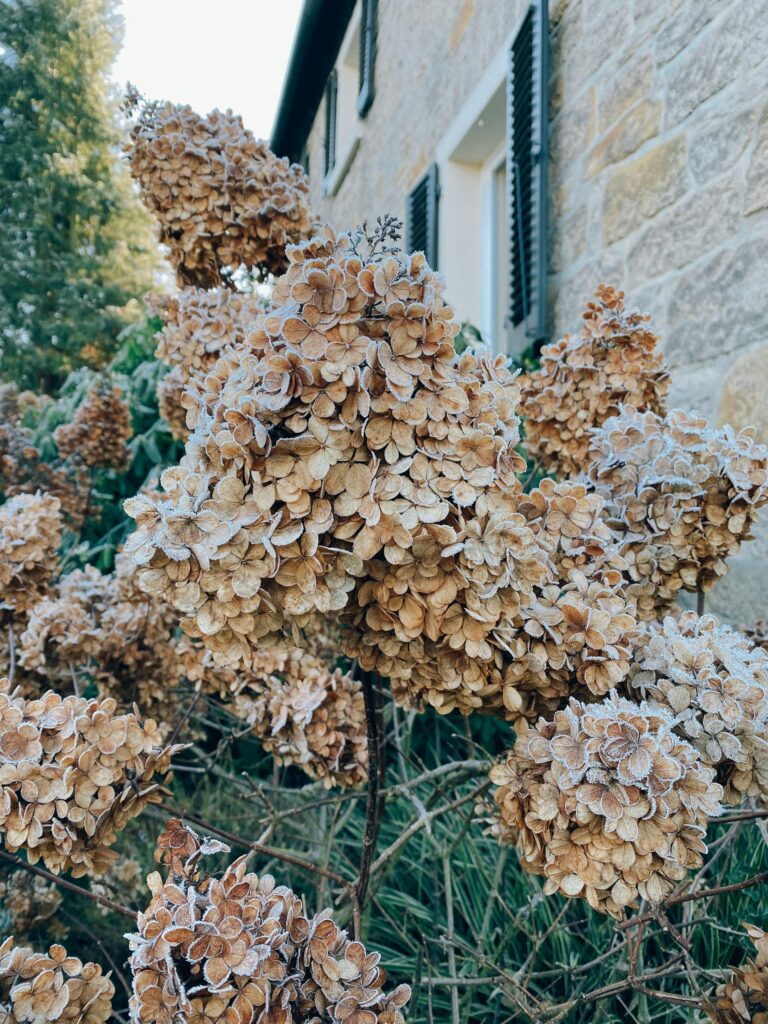
- Lavender, hydrangea, and butterfly bush
- Native plants or those with seed heads that birds can enjoy
Lilacs:
Hold off pruning—they set their flower buds in late summer. Trim only after blooms fade next spring.
Leaving some plants intact over winter also provides shelter for beneficial insects, which is especially helpful in small gardens where every pollinator counts.
3. Harvest & Store Remaining Crops
Before frost hits, gather whatever is still producing:
- Green tomatoes can ripen indoors in a sunny window or basket.
- Late root crops like carrots or beets can stay in the ground under thick mulch if space allows.
- Herbs can be snipped, dried, or frozen for winter cooking. Hanging them upside down in your kitchen is a simple and satisfying method.
Check your zone’s frost schedule and harvest accordingly—small-space gardens can’t afford to lose even a few precious plants!

4. Plant Fall Crops or Cover Crops
Even in a tiny garden, fall can be productive. Consider:
- Quick-growing crops: leaf lettuce, spinach, radishes
- Garlic: plant in October for next summer’s harvest
- Container-friendly cover crops: clover or winter rye (in a pot or small raised bed) to protect soil and improve fertility
If your space is mostly done for the season, a thin layer of mulch can still protect your soil and beds for spring.

5. Compost & Mulch Your Beds
Fall is the perfect time to nourish your soil, even on a small scale.
Compost ideas:
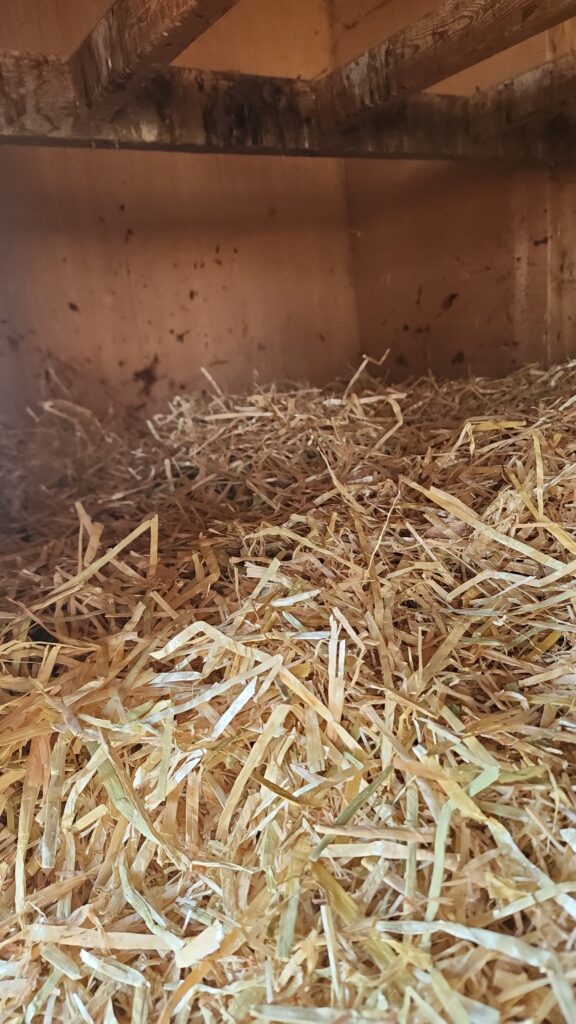
- Brown: dried leaves, straw, dead plant stalks
- Green: kitchen scraps, grass clippings, healthy pulled plants
Once beds are cleared, top with compost or aged manure, then add straw, shredded leaves, or mulch. This keeps soil warm, suppresses weeds, and boosts fertility for next year, even in a raised bed or container.

7. Reflect & Record for Next Season
Even tiny gardens benefit from a little note-taking:
- Which varieties thrived in small beds or containers?
- What pests or challenges popped up?
- What would you grow more—or less—of next year?
A simple seasonal journal helps you remember what worked when spring rolls around again.

Frequently Asked Questions
When should I start my fall garden cleanup?
You can start fall garden cleanup once your plants have finished producing or after the first light frost. In small space gardens, it’s often best to clean up in stages so you’re not removing everything at once and leaving your beds bare too early.
Should I cut everything back in the fall?
Not everything needs to be cut back. Remove any diseased or dead plant material, but healthy plant matter like herbs or hardy perennials can often be left until spring. In small space gardens, keeping some structure can also help protect soil and beneficial insects.
Can I compost garden debris in the fall?
Yes, most healthy plant material can be added to your compost pile. Avoid composting anything diseased or pest-infested. Fall is actually a great time to build up your compost since you have a lot of natural material coming out of the garden.
Do I need to remove all weeds before winter?
It’s best to remove weeds before they go to seed so they don’t spread next season. However, you don’t need to achieve a perfectly clean bed. A light cleanup is usually enough for small homestead gardens.
Should I mulch my garden beds for winter?
Yes, mulching is very helpful for protecting soil during the winter months. It helps regulate soil temperature, reduce erosion, and add organic matter as it breaks down. Leaves, straw, or shredded plant material all work well.
What should I do with empty garden beds in a small space homestead?
If you’re not planting a winter crop, cover empty beds with mulch or compost. This protects soil health and reduces weed growth so your beds are ready for planting in spring.
Can I leave plant roots in the soil?
In many cases, yes. Healthy roots can break down over winter and improve soil structure. However, remove roots from diseased plants to avoid carrying problems into the next season.
Final Thoughts
A thoughtful fall garden cleanup in a small space is about more than tidying up—it’s about protecting your investment, feeding your soil, and setting up next year’s success. There’s something deeply satisfying about closing your garden with care, like tucking it in for a long winter’s nap.
Take your time, enjoy the rhythm of the season, and let your little homestead garden rest well.
Happy fall tending!
XO Bri
More Homestead and Garden Inspiration
If you’re loving these fall garden tips, you’ll enjoy these other posts filled with practical advice, seasonal inspiration, and ideas for creating a cozy, productive homestead. Click through to explore more ways to nurture your garden and home.

Your Small Space Homestead Guide
Want to make the most of your garden and homestead, even if your space is limited? My Small Space Homestead Guide is full of tips, tricks, and inspiration for growing, preserving, and living intentionally on a smaller scale. Sign up for my emails to get your free guide and start building your cozy, productive homestead today.

Let’s Stay Connected!
I’d love to stay connected with you beyond the blog. Follow along on Pinterest for seasonal garden and homestead inspiration, and on Instagram for behind-the-scenes glimpses of the home, the garden, and all the little moments that make life cozy and intentional. Come join our little corner of the internet where we celebrate the simple joys of home and garden life together.