Homemade Rosemary Sage Finishing Salt

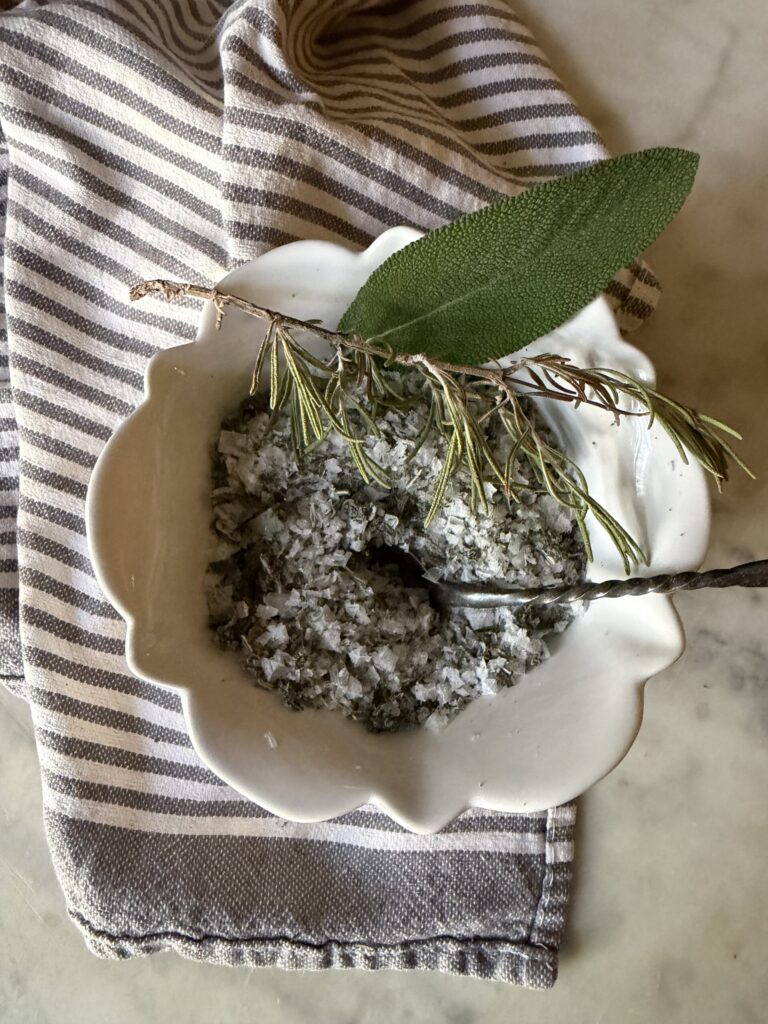
Homemade rosemary sage salt is a simple way to bring the flavor of the herb garden into your kitchen all year long. Made with flaky sea salt and dried herbs, this savory finishing salt is wonderful for everyday cooking, stocking the pantry, and putting together thoughtful homemade holiday gifts.
What You’ll Learn in This Post
- How to make homemade rosemary sage salt with just three ingredients.
- How to harvest and dry fresh rosemary and sage using a dehydrator, oven, or traditional air-drying method.
- How to use this homemade seasoning blend in everyday cooking.
- How to package your herb salt for holiday gifts, hostess gifts, and other special occasions.
- How to store your finished salt for the best quality.
If you enjoy cooking with herbs, especially fresh herbs from your garden, you will enjoy these other recipes from the blog: Creamy Baked Parmesan Rice (Easy Oven-Baked Side Dish), Gut Healthy Roasted Chicken with Fresh Herbs and Turmeric, and also Easy Rosemary Garlic Compound Butter (Perfect for Steak, Chicken & Vegetables).
A Little About Making Your Own Seasonings
One of the things I enjoy most about cooking from scratch is finding simple ways to make the ingredients I already have go a little further. Herbs growing in the garden can be harvested, dried, and saved for the months when fresh herbs aren’t as readily available.
Rosemary and sage are two of my favorite herbs to pair together. They have a wonderful savory aroma that feels right at home in fall and winter cooking, especially alongside roasted potatoes, chicken, pork, and homemade bread.
Making your own herb salt is also a lovely way to stock the pantry with something useful and a little special. A small jar tucked into a gift basket or wrapped up with a pretty ribbon makes a thoughtful homemade gift for someone who enjoys cooking.
Why You’ll Love This Recipe
Simple ingredients: You only need flaky sea salt, dried rosemary, and dried sage to make this savory blend.
A wonderful way to preserve garden herbs: If you grow rosemary and sage, drying some of your harvest allows you to enjoy their flavor long after the growing season.
Useful in the everyday kitchen: This isn’t just a pretty seasoning to keep on the shelf. It can be used on roasted vegetables, meat, potatoes, and so many other dishes.
Perfect for homemade gifts: Small glass jars filled with herb salt are lovely for Christmas, hostess gifts, birthdays, and thoughtful gifts for the home cook.
Easy to customize: You can adjust the amount of each herb to suit your taste or make a larger batch once you know how much you enjoy using.
Ingredients for Rosemary Sage Salt
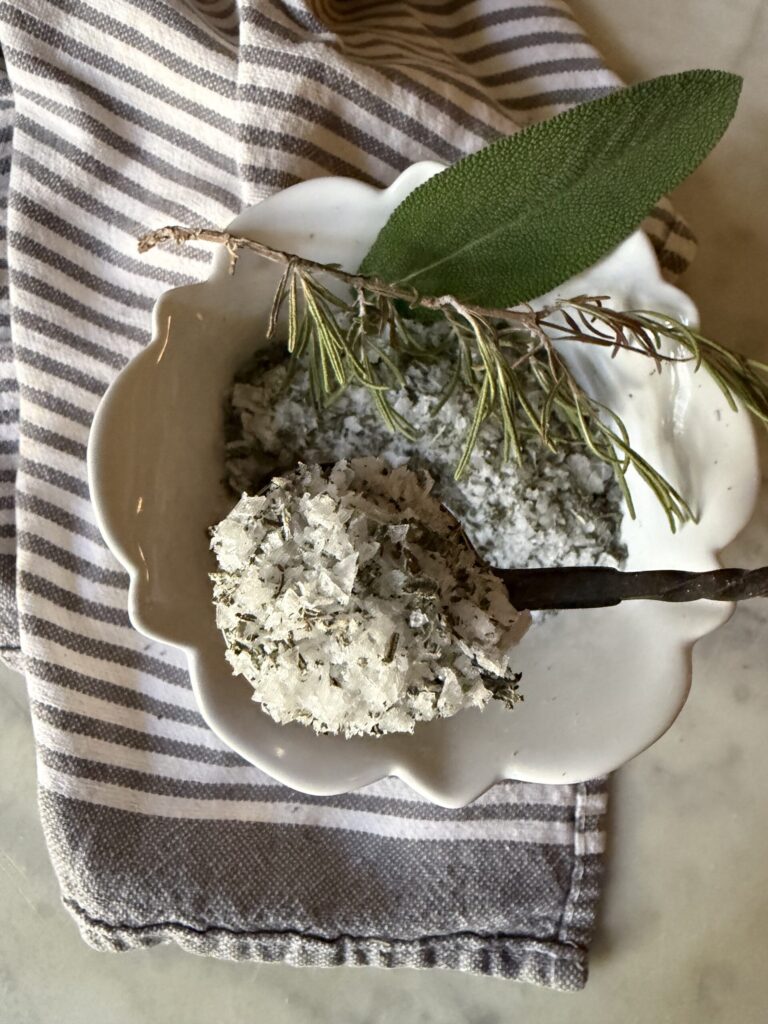
- ½ cup flaky sea salt: I use Maldon sea salt flakes for their delicate texture and lovely finishing quality. You can use another flaky sea salt if you prefer.
- 1½ teaspoons dried rosemary: Rosemary brings a woodsy, savory flavor that pairs especially well with roasted meats and vegetables.
- 1 tablespoon dried sage: Sage adds an earthy, aromatic flavor and gives the finished salt pretty green flecks.
For this recipe, the herbs should be completely dried and cooled before mixing them with the salt. Fresh herbs contain moisture, so don’t add freshly chopped rosemary or sage directly to a jar of salt intended for pantry storage.
How to Make Homemade Rosemary Sage Salt
Step 1: Dry the rosemary and sage
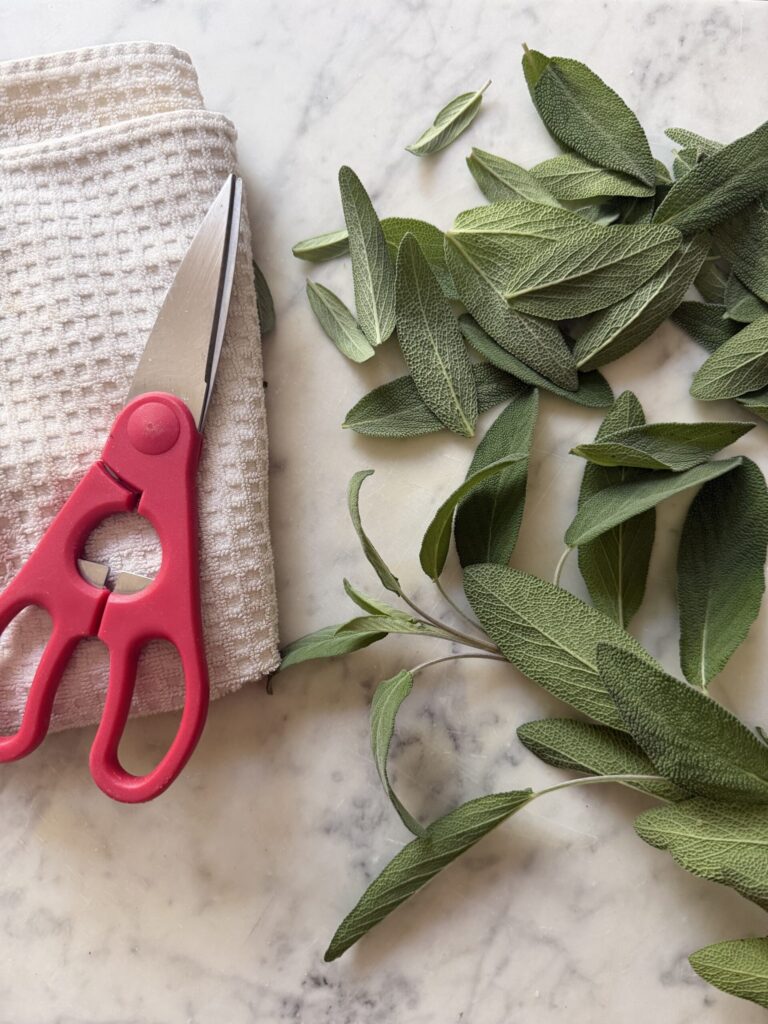
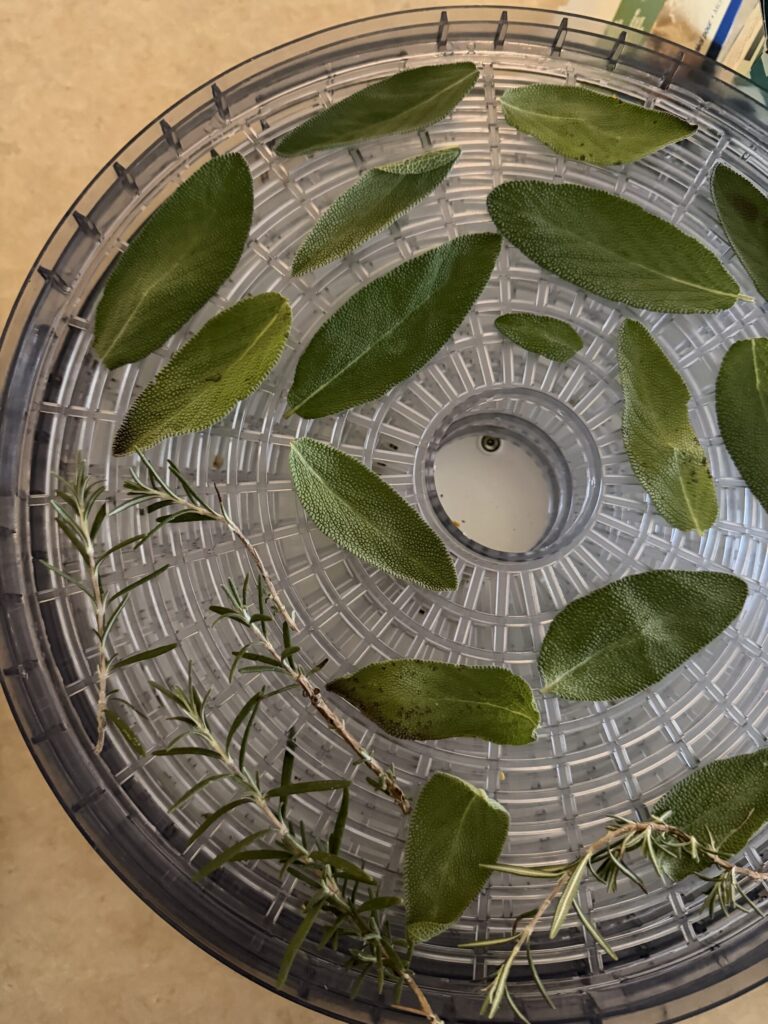
If you’re using herbs you’ve harvested from your garden, dry them completely before making the seasoning.
For rosemary, you can leave the needles attached to the stems while drying. Once the needles are brittle, strip them from the stems and crumble them into smaller pieces.
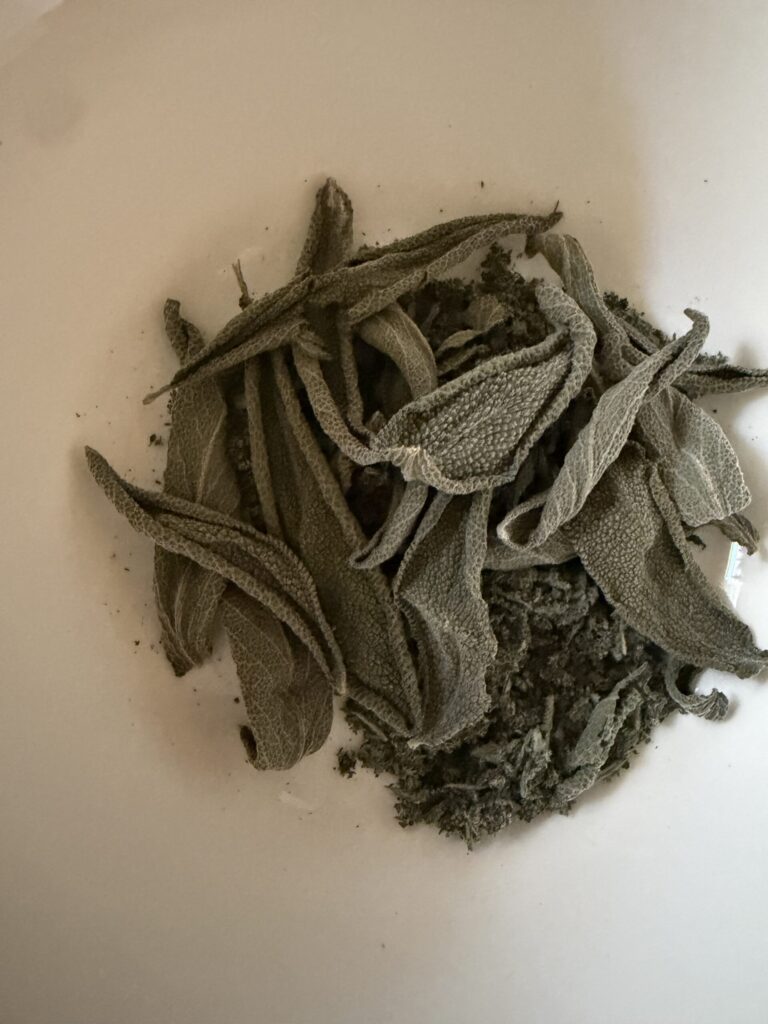
For sage, remove the leaves from the stems and dry them until they crumble easily between your fingers.
You can use a food dehydrator, oven, or traditional air-drying method. See the herb-drying guide below for details.
Step 2: Prepare the herbs
Measure 1½ teaspoons of dried rosemary and 1 tablespoon of dried sage.
Crumble the rosemary into small pieces. For a more even distribution of flavor, you can crush it with a mortar and pestle, using a little of the salt to help break it down.
Crumble the sage by hand, leaving some small green flecks for a pretty, homemade appearance.
Step 3: Combine the salt and herbs
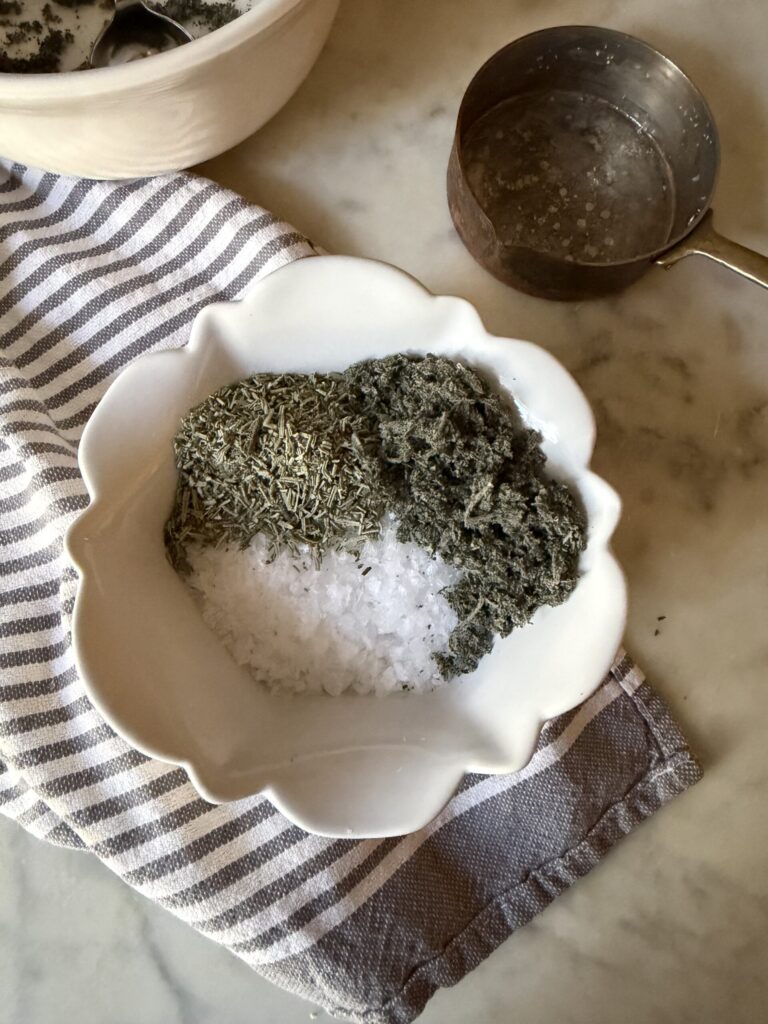
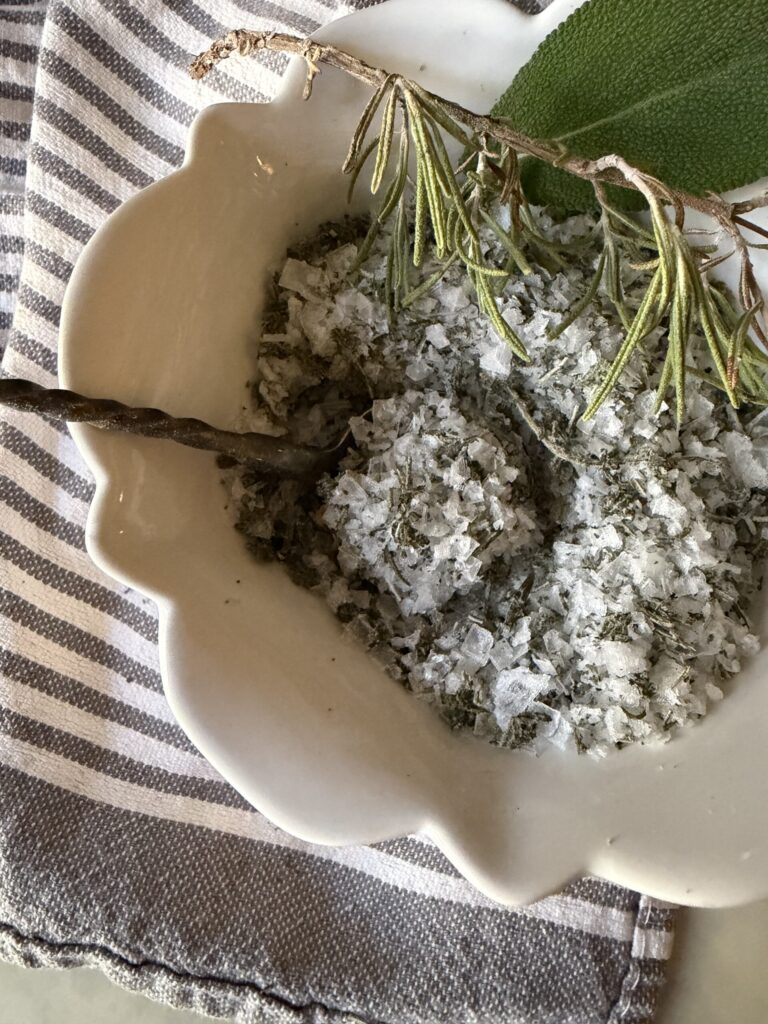
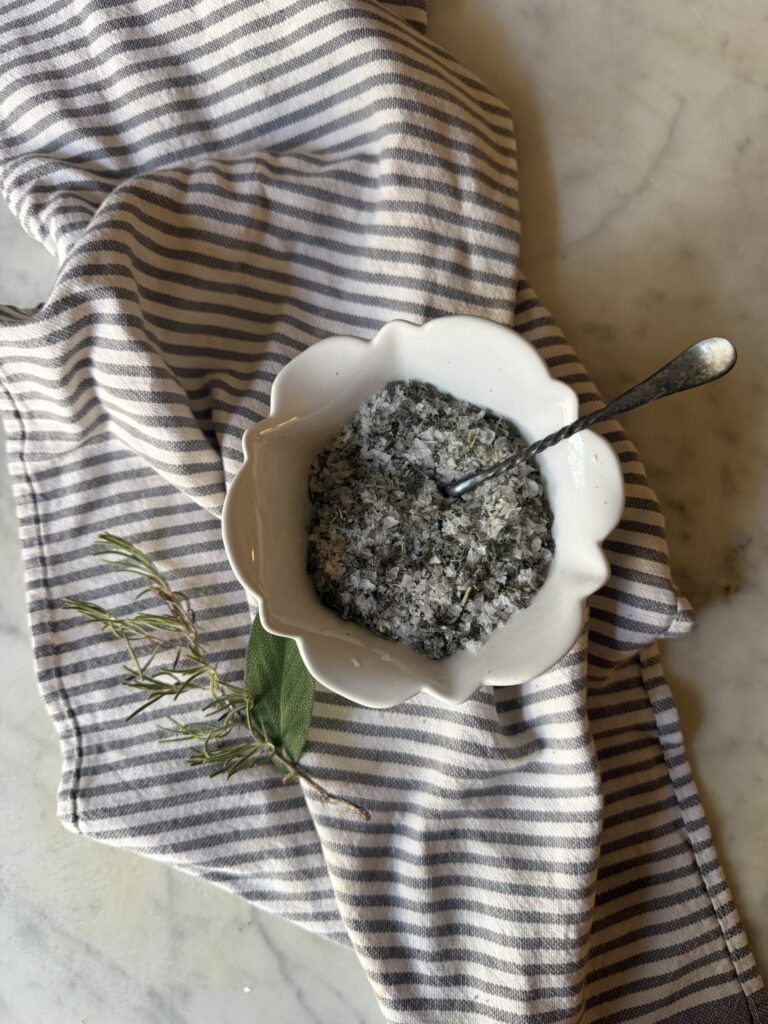
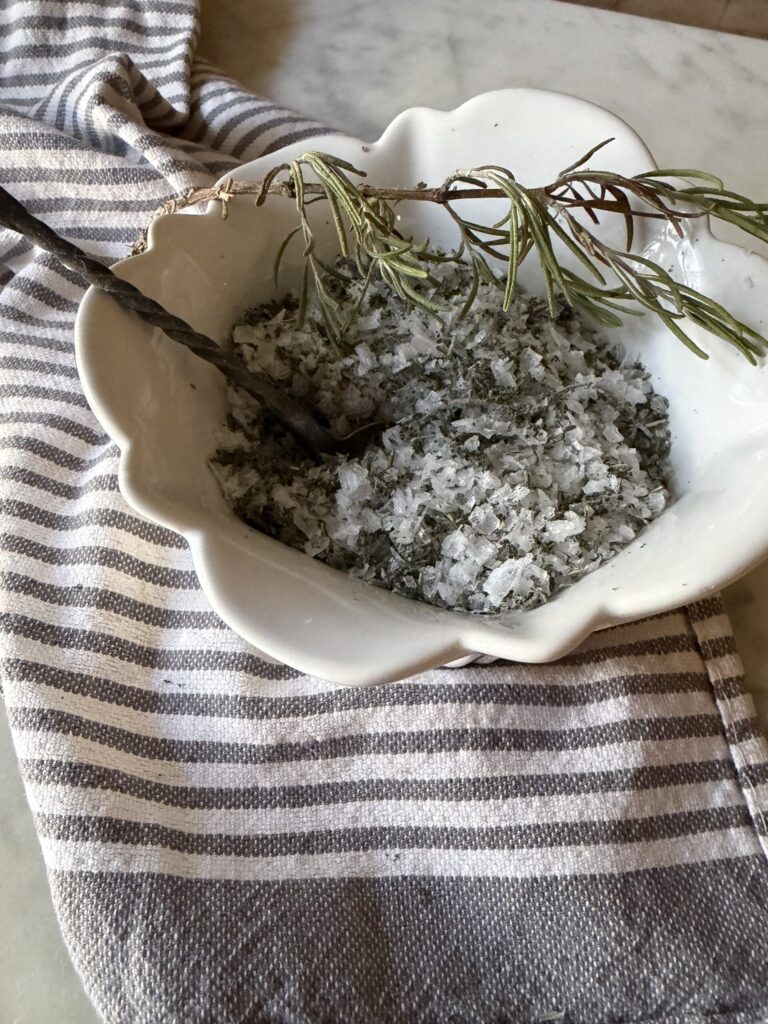
Add the flaky sea salt to a small bowl. Gently stir in the rosemary and sage until the herbs are distributed throughout the salt.
Try not to crush all the salt flakes. Their delicate texture is part of what makes this blend so lovely as a finishing salt.
Step 4: Transfer to a jar
Spoon the finished rosemary sage salt into a clean, completely dry jar with an airtight lid.
Label the jar with the name of the seasoning and the date it was made. Store it in a cool, dry cupboard away from heat, sunlight, and steam.
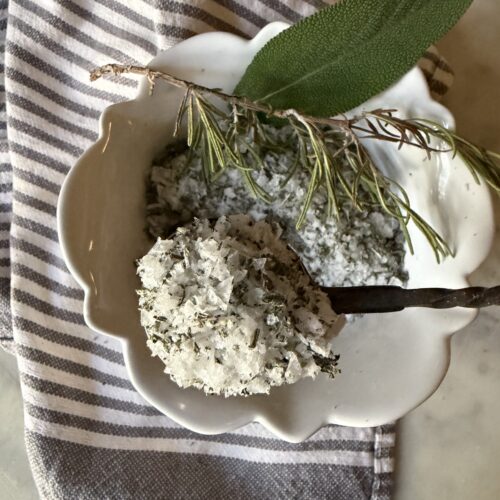
Homemade Rosemary Sage Salt
Ingredients
- 1/2 cup flaky sea salt
- 1 1/2 tsp dried rosemary
- 1 TBSP dried sage
Instructions
- In a small bowl combine the dried rosemary, dried sage, and sea salt flakes with a spoon or small whisk. Store in spice jars or an air tight container. Enjoy!
Notes
-
Make sure rosemary and sage are completely dried and cooled before mixing with the salt.
-
Maldon flaky sea salt gives this seasoning a lovely finishing texture. Other flaky sea salts can also be used.
-
For a stronger herbal flavor, adjust the amount of rosemary or sage to your preference.
-
Store in an airtight jar in a cool, dry cupboard. Always use a dry spoon when scooping out the seasoning. Do not open pour over a steaming pot!
-
This recipe makes approximately ½ cup of finished seasoning, depending on how much the salt flakes settle.
How to Harvest and Dry Your Own Rosemary and Sage
If you have rosemary or sage growing in your garden, you can make this recipe even more rewarding by harvesting and drying your own herbs.
I like the idea of having a little collection of dried herbs tucked into the pantry, ready to use in soups, homemade seasonings, and all sorts of from-scratch recipes.
The key to making a dry seasoning blend is to remove the moisture from the herbs before mixing them with the salt.
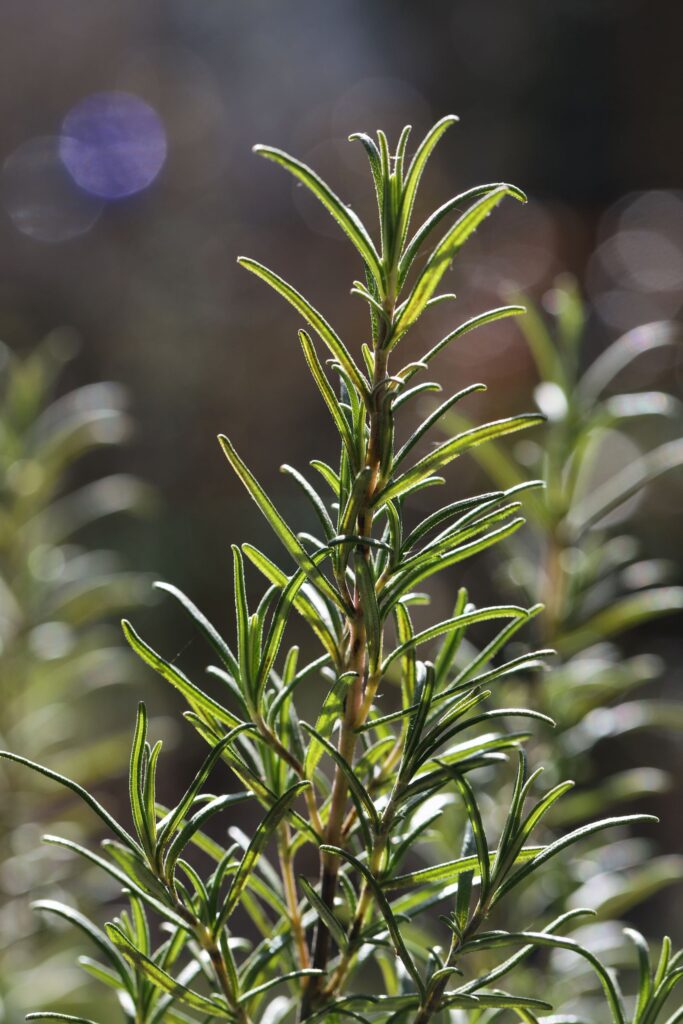
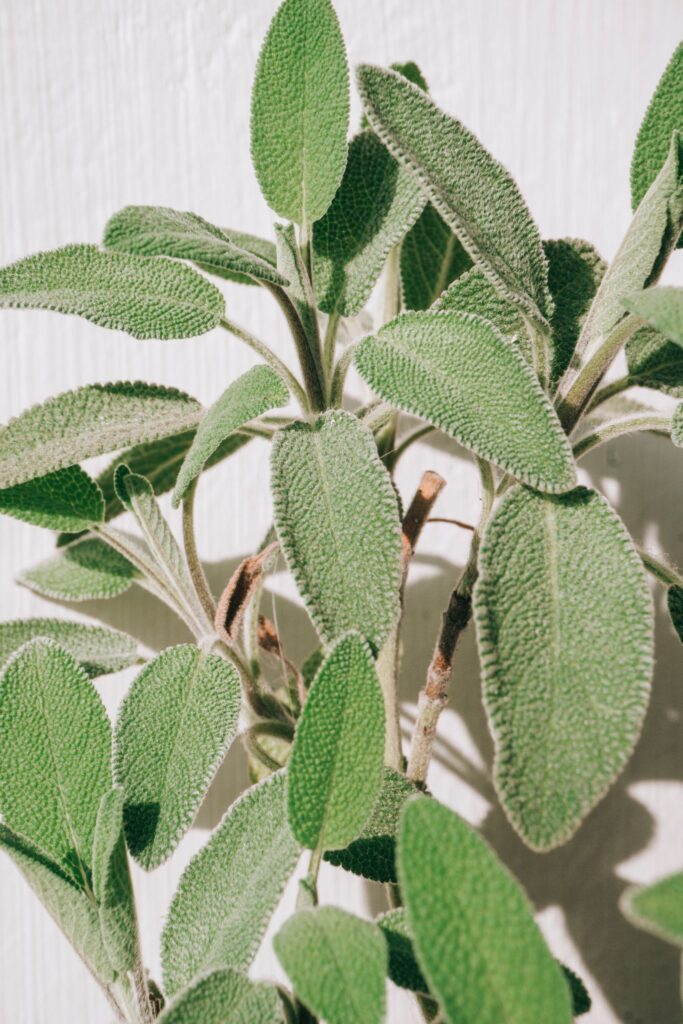
Drying Herbs in a Food Dehydrator
A food dehydrator is a convenient way to dry herbs, especially if you’re already using it to preserve other things from the garden.
- Harvest healthy rosemary sprigs or sage leaves.
- Rinse the herbs if needed and pat them thoroughly dry with a clean towel.
- Arrange them in a single layer on the dehydrator trays.
- Dry according to your dehydrator manufacturer’s instructions. For many herbs, temperatures around 95–115°F are suitable, although the right setting depends on the appliance.
- Check the herbs periodically until they are brittle and crumble easily.
- Allow them to cool completely before stripping the rosemary needles from their stems or crumbling the sage leaves.
Drying time varies by appliance, humidity, and the thickness of the herbs. As a general starting estimate, herbs may take approximately 2–6 hours in a dehydrator, sometimes longer.
If your dehydrator has a fixed temperature setting, check the herbs frequently and rely on their final texture rather than the clock.
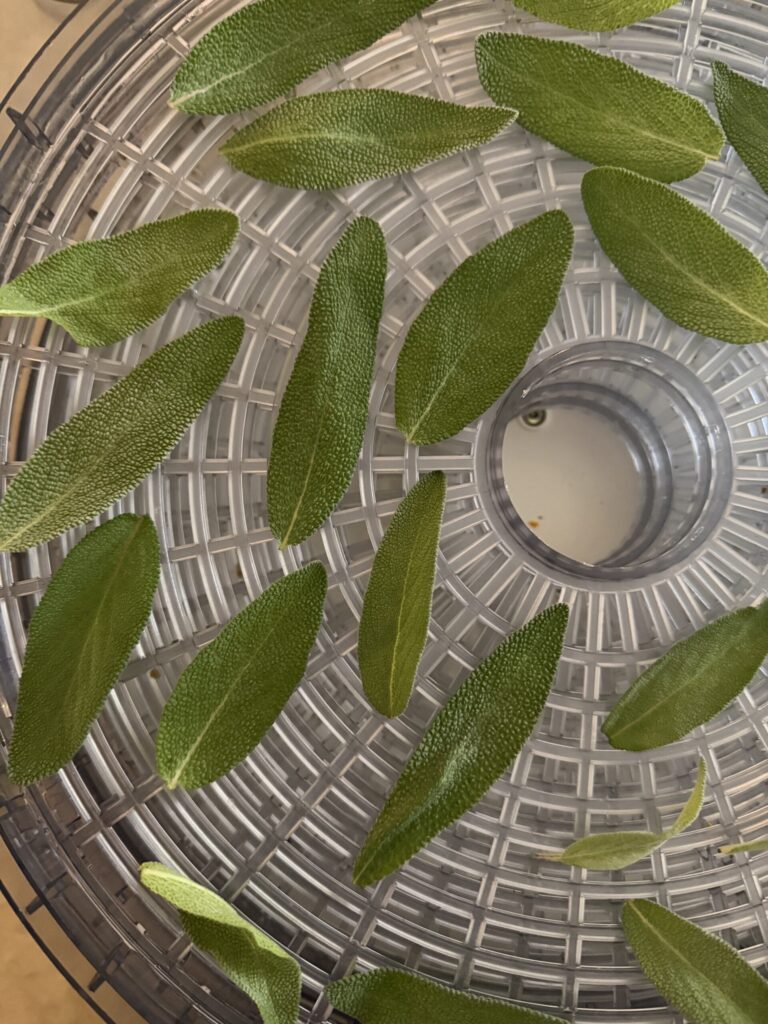
Drying Herbs in the Oven
An oven can also be used if you don’t have a dehydrator.
- Preheat the oven to its lowest suitable setting, ideally around 150–170°F if your oven allows it.
- Spread the clean, thoroughly towel-dried herbs in a single layer on a parchment-lined baking sheet.
- Place the tray in the oven and check the herbs frequently.
- Remove individual leaves or sprigs as they become brittle and completely dry.
- Cool the herbs completely before storing.
Oven drying may take approximately 1–3 hours, but the time varies considerably with oven temperature, herb thickness, and moisture content. Some ovens run hotter than their settings suggest, so use extra care with delicate leaves.
Air-Drying Herbs
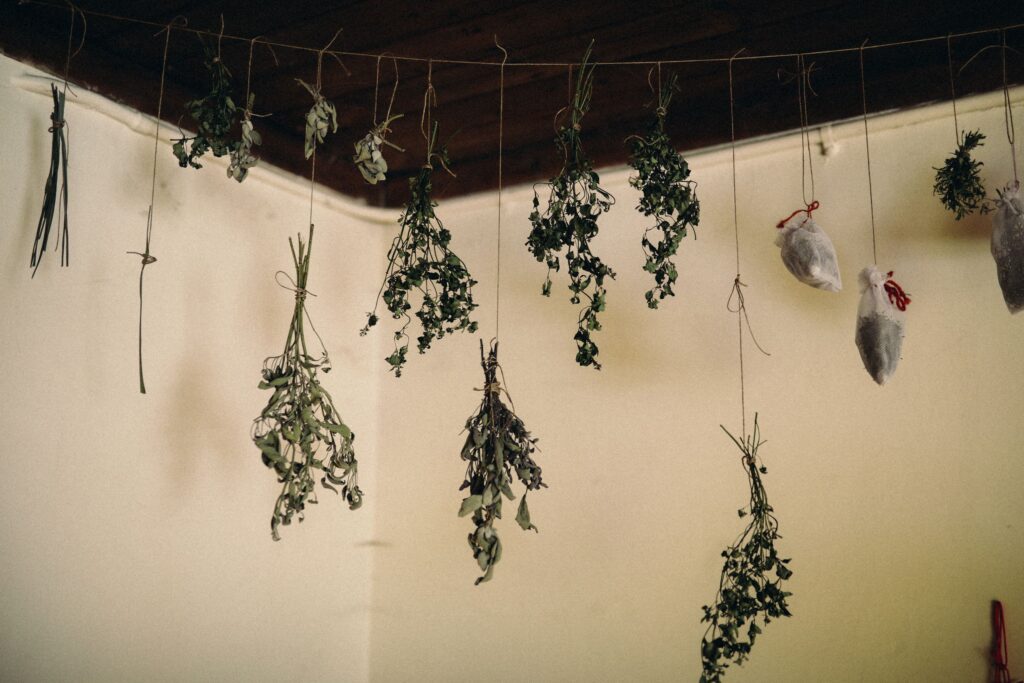
If you prefer a traditional method, you can hang small bunches of rosemary or sage to dry.
- Gather a small bundle of clean, dry herbs.
- Tie the stems together loosely.
- Hang the bundle upside down in a warm, dry, well-ventilated area away from direct sunlight.
- Allow the herbs to dry until the leaves are crisp and crumble easily.
Air-drying commonly takes about 1–2 weeks, sometimes longer in humid conditions. Small, loosely tied bundles dry more evenly than large, dense bunches.
Avoid storing herbs that remain soft or damp. If the weather is humid or the herbs aren’t drying well, use a dehydrator instead.
How to Tell When Herbs Are Dry Enough
Properly dried rosemary needles and sage leaves should crumble readily between your fingers rather than bend or feel leathery.
After drying, let the herbs cool completely. For pantry storage, keep them in a clean, airtight container in a cool, dry place. If condensation, mold, or an unusual smell develops, discard the affected herbs.
What to Serve Rosemary Sage Salt On
This homemade herb salt is a versatile seasoning that can be used while cooking or sprinkled over food just before serving.
Here are a few of my favorite ways to use it:
Roasted potatoes: Toss potatoes with olive oil and a little of the seasoning before roasting. You can also add a small sprinkle just before serving.
Roasted vegetables: Try it with carrots, butternut squash, Brussels sprouts, or green beans.
Chicken and pork: Use a little as part of your seasoning before roasting or grilling.
Homemade bread: Sprinkle a small amount over focaccia or savory dinner rolls before baking, adjusting any additional salt in the recipe.
Eggs: Add a pinch to scrambled eggs, omelets, or a fried egg.
Soups and stews: Stir in a small amount near the end of cooking to add a savory herbal note. Taste before adding more, since the saltiness will vary with the other ingredients.
Roasted root vegetables: Rosemary and sage pair particularly well with the earthy sweetness of fall and winter vegetables.
Because Maldon flakes are larger than ordinary table salt, remember that a teaspoon of flaky salt does not season food in quite the same way as a teaspoon of fine salt. Start with a little and adjust to taste.
How to Gift Homemade Rosemary Sage Salt
Homemade seasonings are one of my favorite ideas for thoughtful, useful gifts. They’re small enough to tuck into a gift basket, easy to pair with other kitchen goodies, and lovely for someone who enjoys cooking from scratch.
Use Small Glass Jars
Small glass jars with airtight lids are a wonderful choice. A 1.5-fluid-ounce jar is a nice size for a specialty finishing salt, particularly when you’re putting together a collection of different flavors.
Remember that fluid ounces measure the jar’s volume, not the weight of the salt. How much fits will depend on the size of the flakes and how the seasoning settles.
Add Simple, Pretty Labels
For a classic kitchen look, use cream labels with understated lettering or a small botanical illustration. Include the seasoning name and ingredients, along with the date made.
You might call the collection The Kitchen Garden Seasoning Collection or Herbs from the Garden.
Create a Homemade Seasoning Gift Set
Pair the rosemary sage salt with other homemade blends for a useful little pantry gift.
Some ideas include:
- Orange finishing salt
- Basil and thyme seasoning
- Italian herb seasoning
- Garlic and herb seasoning
- Lemon and rosemary salt
Keep each blend in its own clean, dry jar, and make sure all the ingredients are appropriate for dry pantry storage.
Occasions for Gifting Herb Salt
These little jars are lovely for Christmas and holiday gift baskets, stocking stuffers, hostess gifts, housewarming gifts, birthdays, and thank-you gifts.
You could also pair a jar with a wooden spoon, a linen tea towel, a handwritten recipe card, or a loaf of homemade bread for a simple, thoughtful gift.
For holiday gifting, prepare the dried herbs ahead of time and mix the seasonings closer to when you plan to package them. That way, you can make several different varieties without needing to harvest everything at once.
Storage Tips
Store rosemary sage salt in a clean, completely dry, airtight jar in a cool, dry cupboard away from the stove and other sources of steam.
Always use a dry spoon when scooping out the seasoning, and avoid shaking the jar directly over a steaming pot.
Because the herbs are dried and the blend contains no added liquid, it is suitable for dry pantry storage when prepared and handled properly. However, this recipe has not been tested for a specific shelf life, so I wouldn’t promise a fixed storage duration. Discard the blend if it becomes damp or shows signs of mold or other spoilage.
For the best flavor, make a batch you can reasonably use while the dried herbs are still fragrant.
Frequently Asked Questions
Can I use fresh rosemary and sage to make herb salt?
Fresh herbs should not be mixed directly into a salt blend intended for pantry storage. They contain moisture, and salt alone does not guarantee safe preservation. Dry the herbs thoroughly first, then cool them before mixing.
Can I use dried rosemary and sage from the store?
Yes! Store-bought dried herbs are a convenient option. Check that they smell fresh and aromatic and have been stored in a dry container.
Can I use regular table salt instead of flaky sea salt?
Yes. Fine iodized table salt can be used, although the texture and flavor will differ. Fine salt is more concentrated by volume than flaky salt, so start with less seasoning when using it on food and adjust to taste.
How long does it take to dry rosemary?
In a dehydrator, rosemary may take around 2–6 hours or longer, depending on the appliance and the thickness of the sprigs. In the oven, it may take approximately 1–3 hours. Air-drying usually takes 1–2 weeks or longer. Always check that the needles are completely brittle before storing.
Do I need to remove rosemary from the stems before drying?
No. You can dry rosemary on the stems and strip off the needles afterward. This makes handling the small needles easier and helps keep them from falling through the dehydrator trays.
What can I use rosemary sage salt for?
It works well on roasted potatoes, root vegetables, chicken, pork, eggs, homemade focaccia, and soups. Add a small amount at first and adjust to taste.
Is rosemary sage salt a good homemade Christmas gift?
Absolutely! Small glass jars of homemade herb salt are useful, attractive, and easy to pair with other homemade seasonings. They work well in holiday gift baskets, stocking stuffers, hostess gifts, and gifts for home cooks.
Can I make this recipe in a larger batch?
Yes. You can multiply the ingredients to make a larger batch. Keep the same proportions, mix gently, and store the finished salt in clean, dry, airtight jars.
A Little Something for the Pantry
I love the idea of having simple homemade seasonings ready to reach for in the kitchen, especially when they’re made with herbs from the garden. This rosemary sage salt is an easy place to start, whether you’re making a small jar for your own pantry or putting together a few thoughtful gifts for the holidays.
Sometimes the most useful things to make at home are the simplest ones, and a little jar of fragrant herbs and flaky salt is a lovely reminder of that.
XO, Bri
More Homemade Seasoning Blends You Will Love
These homemade seasoning blends from my kitchen pantry are simple to make, full of flavor, and a wonderful way to stock your pantry with versatile, from-scratch staples for everyday cooking!

Let’s Stay Connected!
I’d love to stay connected! Follow along on social media for more from-scratch recipes, seasonal inspiration, and little glimpses of life here at Our Manor On Main.